
Your Garage Door Is Heavier Than You Think
Most homeowners don't give much thought to their garage door beyond whether it opens and closes. But consider this: the average residential garage door weighs between 130 and 350 pounds. That makes it the heaviest moving object in your home — and potentially the most dangerous if safety features aren't working properly.
For families with young children or pets in Union City, garage door safety isn't something to put off. Every year, thousands of injuries are reported nationwide from garage door accidents, and many of them are preventable with a few simple precautions and regular maintenance.
Test Your Auto-Reverse Feature Monthly
Since 1993, federal law has required all garage door openers to include an auto-reverse mechanism. This feature forces the door to reverse direction if it encounters an obstruction while closing. It's your first line of defense against a serious accident — but only if it's working correctly.
Here's how to test it:
- Place a 2x4 board flat on the ground in the path of the garage door.
- Press the button to close the door.
- When the door contacts the board, it should immediately reverse direction and open back up.
If the door doesn't reverse, stop using it immediately and call a professional. This is a critical safety failure that needs to be addressed right away.
Check Your Photo-Eye Sensors
Modern garage door openers also include photo-eye sensors — small devices mounted on either side of the door near the ground. These sensors project an invisible beam across the opening. If anything breaks that beam while the door is closing, the door reverses automatically.
To test your photo-eye sensors:
- Start closing the garage door with the wall button or remote.
- While the door is moving down, wave a broom handle or similar object through the sensor beam near the bottom of the door.
- The door should reverse immediately.
If it doesn't, check to see if the sensor lenses are dirty, misaligned, or blocked by cobwebs or debris. Clean them gently with a soft cloth. If the problem persists, the sensors may need to be realigned or replaced by a technician.
Keep Sensors Clear and Clean
In Union City, dust and pollen can accumulate on photo-eye lenses throughout the year, especially during spring and summer. Make it a habit to wipe down the sensors every month or two. It takes less than a minute and could prevent a serious accident.
Teach Kids That the Garage Door Is Not a Toy
Children are naturally curious, and a garage door that goes up and down at the push of a button can seem like a fun thing to play with. But it's important to set clear rules early:
- Never let children play under or near a moving garage door. Even with safety features in place, the risk isn't worth it.
- Keep remotes and wall buttons out of reach. Mount the wall button at least five feet off the ground so small children can't reach it. Keep remote controls stored where kids can't access them.
- Teach older children how to use the door safely. If your kids are old enough to operate the garage door, make sure they understand to always watch the door until it's fully closed and to never try to run under it.
- Never let children play with or near the garage door tracks, springs, or cables. These components are under extreme tension and can cause severe injury.
Protect Your Pets Too
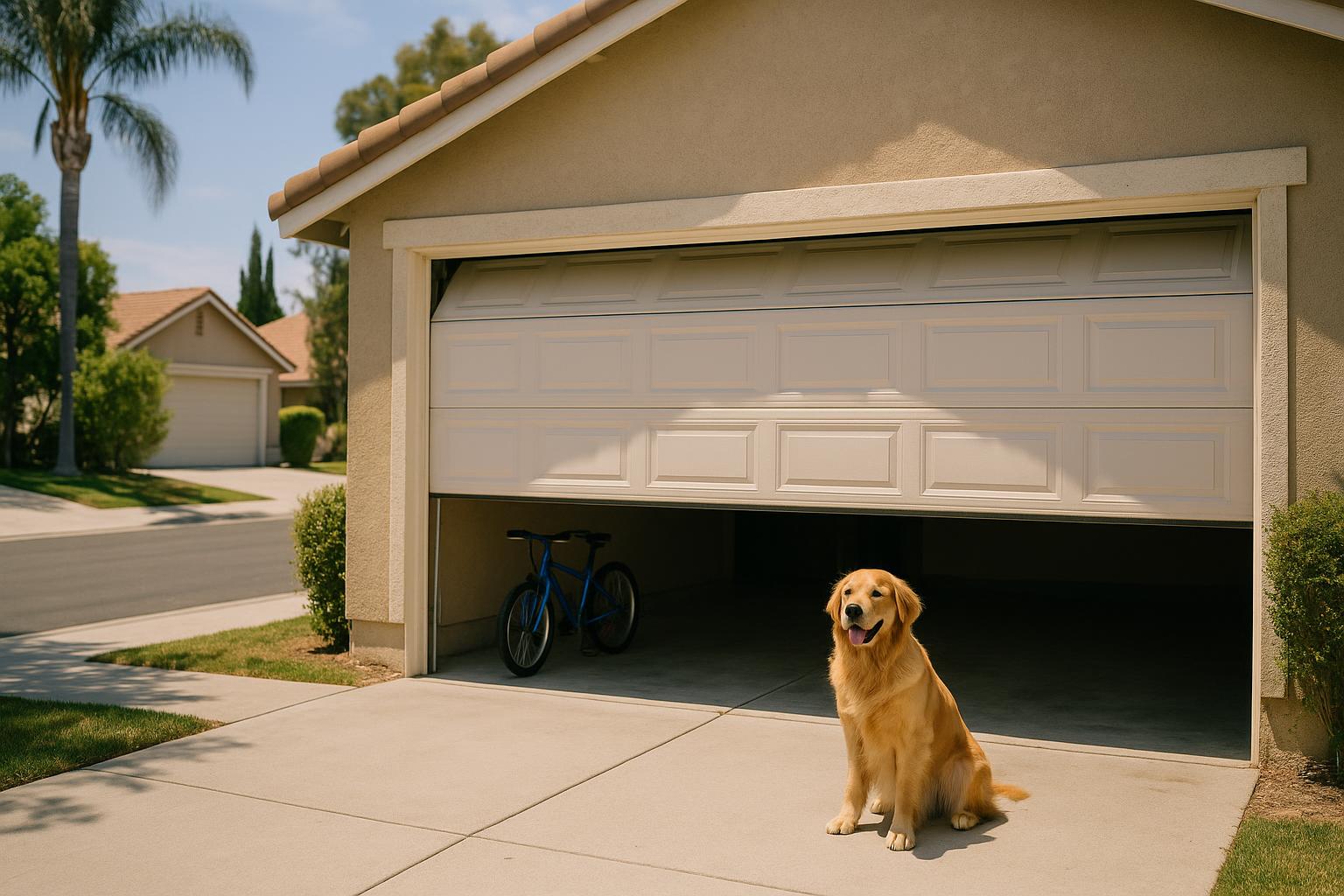
Dogs and cats can be just as vulnerable as children around garage doors. A pet that darts under a closing door may not trigger the photo-eye sensors if they pass through too quickly or at the wrong angle.
Here are a few tips to keep your pets safe:
- Always visually confirm the garage door has fully closed before walking away.
- If your pet likes to hang out in the garage, do a quick check before closing the door to make sure they're clear of the doorway.
- Consider keeping pets out of the garage entirely if they tend to dart in and out unpredictably.
Don't Forget About Manual Locks and Emergency Release
If you have an older garage door or one with a manual lock, make sure the lock isn't engaged when you try to operate the door with an automatic opener. Attempting to open a locked door with a motorized opener can damage the door, the opener, or both — and can create a sudden hazard if something gives way unexpectedly.
You should also know where your emergency release cord is and how to use it. This red-handled cord hangs from the opener rail and allows you to disconnect the door from the opener so you can operate it manually. In an emergency — such as a power outage or opener malfunction — this is how you get the door open. Make sure every adult in your household knows how to use it, but keep it out of reach of young children.
Schedule Regular Professional Maintenance
The best way to keep your garage door safe for your entire family is to have it inspected and maintained by a professional at least once a year. A trained technician can identify worn parts, test safety features, lubricate moving components, and adjust spring tension — all things that are difficult or dangerous to do on your own.
During a maintenance visit, a technician will typically:
- Test the auto-reverse and photo-eye sensors
- Inspect springs, cables, rollers, and hinges for wear
- Tighten loose hardware
- Lubricate tracks and moving parts
- Check the balance of the door
- Inspect weatherstripping and seals
If you live in Union City or a nearby community like Fremont, Hayward, or Newark, Union City Garage Door offers comprehensive maintenance services designed to keep your door operating safely and reliably. We'll catch small problems before they become big ones — and before they put anyone at risk.
When to Call for Help
If any of the following apply to your garage door, don't wait — call a professional:
- The auto-reverse feature fails the 2x4 test
- Photo-eye sensors aren't responding
- The door is visibly sagging, uneven, or shaking during operation
- Springs or cables appear frayed, rusted, or broken
- The door drops too quickly when closing
These are all signs that your garage door could be a safety hazard. A quick service call can restore safe operation and give you peace of mind knowing your family — kids, pets, and all — is protected.
Safety Starts With Awareness
Your garage door works hard every day, and it's easy to take it for granted. But a few minutes of attention each month — testing safety features, keeping sensors clean, and reinforcing the rules with your kids — can make a real difference. Pair that with annual professional maintenance, and you'll have a garage door that's not just functional but genuinely safe for everyone in your home.
If it's been a while since your garage door was inspected, give Union City Garage Door a call. We're here to help keep your home safe, one garage door at a time.