
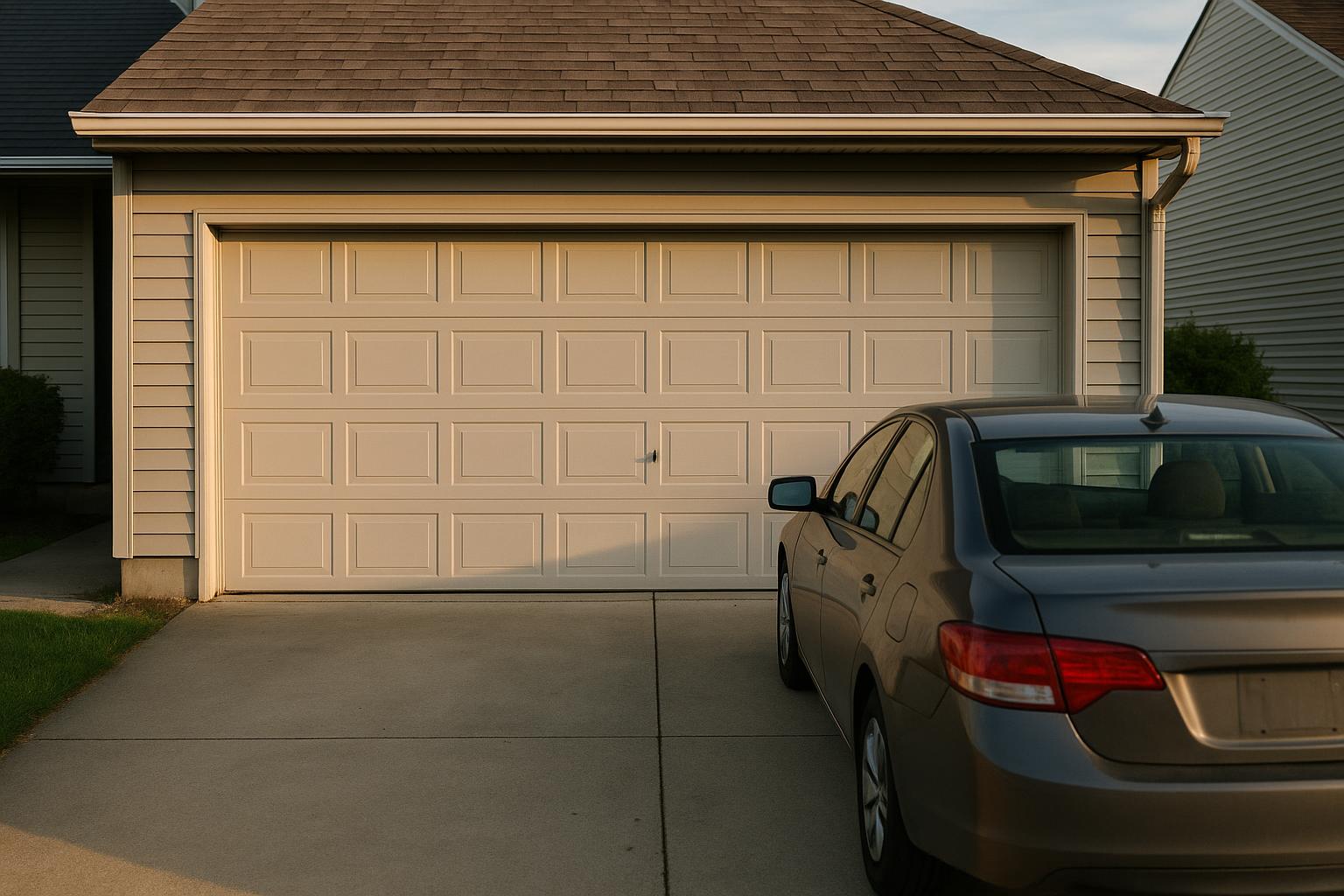
Your Garage Door Won't Open — Now What?
You're running late for work, coffee in hand, ready to head out. You press the button on your garage door opener and… nothing. Or maybe the motor hums but the door doesn't budge. Few things are more frustrating than a garage door that won't cooperate when you need it most.
This is one of the most common calls we get from homeowners in Union City, especially during cooler mornings when metal components contract and lubricant thickens. The good news is that many causes of a non-opening garage door are identifiable, and some are even fixable without a service call. Let's walk through the most likely culprits and what you can do about each one.
1. Check the Obvious First: Power and Batteries
Before you assume the worst, start with the basics. It sounds simple, but a surprising number of garage door issues come down to dead batteries in the remote or a tripped circuit breaker.
- Remote batteries: Replace the batteries in your garage door remote. If the wall-mounted button inside the garage works but the remote doesn't, batteries are almost certainly the issue.
- Power supply: Check whether the opener unit is plugged in. Sometimes vibrations can loosen the plug from the outlet over time. Also check your home's electrical panel for a tripped breaker.
- GFCI outlet: Many garages use GFCI (Ground Fault Circuit Interrupter) outlets. If the outlet has tripped, press the reset button on the outlet itself.
These quick checks take less than two minutes and solve the problem more often than you'd think.
2. The Door Is Locked or the Lock Is Engaged
Some garage doors have a manual lock — a handle or latch on the inside that physically secures the door to the track. If someone in your household accidentally engaged this lock, the opener motor will strain against it and the door won't move.
Check the lock mechanism on the inside of the door. If the horizontal bars extending from the lock have slid into the track slots, simply disengage them. On some modern openers, there's also a lock button on the wall console that electronically disables the remote. Look for a small light indicating the lock feature is active.
3. The Safety Sensors Are Misaligned or Blocked
Every garage door opener manufactured after 1993 includes photoelectric safety sensors near the bottom of the door tracks. These sensors prevent the door from closing on a person, pet, or object — but they can also prevent the door from operating correctly when they're misaligned, dirty, or blocked.
- Make sure nothing is sitting in front of either sensor, including cobwebs, leaves, or storage items.
- Check that both sensor lights are lit. Typically, one glows green and the other amber. If one is blinking, the sensors are out of alignment.
- Gently wipe the sensor lenses with a clean cloth.
- If a sensor has been bumped, carefully adjust it until the indicator light turns solid.
Sensor issues are especially common in garages that double as workshops or storage areas, which is the case for many homes here in Union City and the surrounding Tri-City area.
4. A Broken Spring or Cable
If you hear a loud bang from the garage — sometimes in the middle of the night — followed by a door that won't open the next morning, you're likely dealing with a broken torsion spring. Springs bear the weight of the entire door, and when one snaps, the opener motor simply can't lift the load on its own.
This is not a DIY repair. Garage door springs are under extreme tension and can cause serious injury if handled improperly. If you suspect a broken spring, do not attempt to force the door open. Call a professional right away. Our team handles emergency spring replacements throughout Union City, Fremont, Hayward, Newark, San Leandro, and Castro Valley — often the same day you call.
Similarly, if a lifting cable has snapped or come off the drum, the door may hang unevenly or refuse to move. This also requires professional attention.
5. The Opener's Drive Mechanism Has Failed
Garage door openers use one of three drive systems: chain, belt, or screw drive. Over time, any of these can wear out or break. Signs of a drive failure include:
- The motor runs but the door doesn't move
- You hear grinding or clicking from the opener unit
- The trolley (the piece that connects the opener arm to the door) moves but the door stays put
In many cases, the trolley's connection to the drive has stripped or the gear inside the motor has worn down. If your opener is more than 10 to 15 years old, it may be more cost-effective to replace the entire unit rather than repair it — especially since newer models offer better security features, smartphone connectivity, and quieter operation.
6. The Track Is Bent or Obstructed
Your garage door travels along metal tracks on either side. If a track is bent, dented, or has debris lodged in it, the door can get stuck partway or refuse to move at all. Visually inspect the tracks from top to bottom. Look for:
- Visible bends or gaps between the track and the wall
- Loose mounting brackets
- Buildup of dirt, grease, or small objects in the track channel
Minor debris can be cleared with a rag, but bent tracks should be handled by a technician. Forcing a door through a damaged track can cause further damage to the door panels and the opener.
7. Cold Weather and Lack of Maintenance
While Union City enjoys relatively mild weather compared to much of the country, morning temperatures can still dip low enough to affect your garage door's performance. Cold weather causes metal parts to contract and lubricant to thicken, which means more friction on moving parts.
Regular maintenance — including lubricating hinges, rollers, springs, and tracks — goes a long way toward preventing those frustrating mornings when the door just won't cooperate. We recommend scheduling a professional maintenance visit at least once a year to keep everything in top shape.
When to Call a Professional
If you've checked the power, batteries, sensors, and locks and the door still won't open, it's time to call in a pro. Continuing to press the button repeatedly or trying to force the door can cause additional damage and lead to a more expensive repair.
At Union City Garage Door, we respond quickly because we know a stuck garage door doesn't just inconvenience you — it can leave your home or vehicle unsecured. Whether you're in Union City proper or in nearby communities like Fremont or Castro Valley, our technicians arrive prepared to diagnose and fix the problem on the spot.
Don't Let a Stuck Door Ruin Your Day
A garage door that won't open is stressful, but it's rarely a mystery. Most issues come down to a handful of common causes, and many can be resolved quickly with the right expertise. If you're dealing with a stubborn garage door this morning — or want to prevent it from happening in the future — give us a call. We're here to help keep your garage door working reliably, every single day.