
That Frustrating Moment When Your Garage Door Won't Stay Closed
You press the button on your remote, watch the garage door glide downward, and then — just before it reaches the floor — it stops and reverses right back up. You try again. Same thing. Maybe you try holding the wall button. Still reverses. It's one of the most common garage door complaints we hear from homeowners in Union City, and it's understandably frustrating.
A garage door that reverses before closing completely isn't just an annoyance. It's a security risk. It leaves your home, your vehicles, and your stored belongings exposed. The good news is that this problem usually has a straightforward cause, and most fixes are well within reach — whether you handle them yourself or call in a professional.
Understanding Why Garage Doors Reverse
Modern garage door openers are equipped with safety mechanisms designed to prevent the door from crushing objects, pets, or people. These systems are required by federal law and have been standard on all garage door openers manufactured since 1993. While these safety features are essential, they can sometimes trigger incorrectly, causing the door to reverse when there's no actual obstruction.
Let's walk through the most common reasons this happens and what you can do about each one.
1. Misaligned Safety Sensors
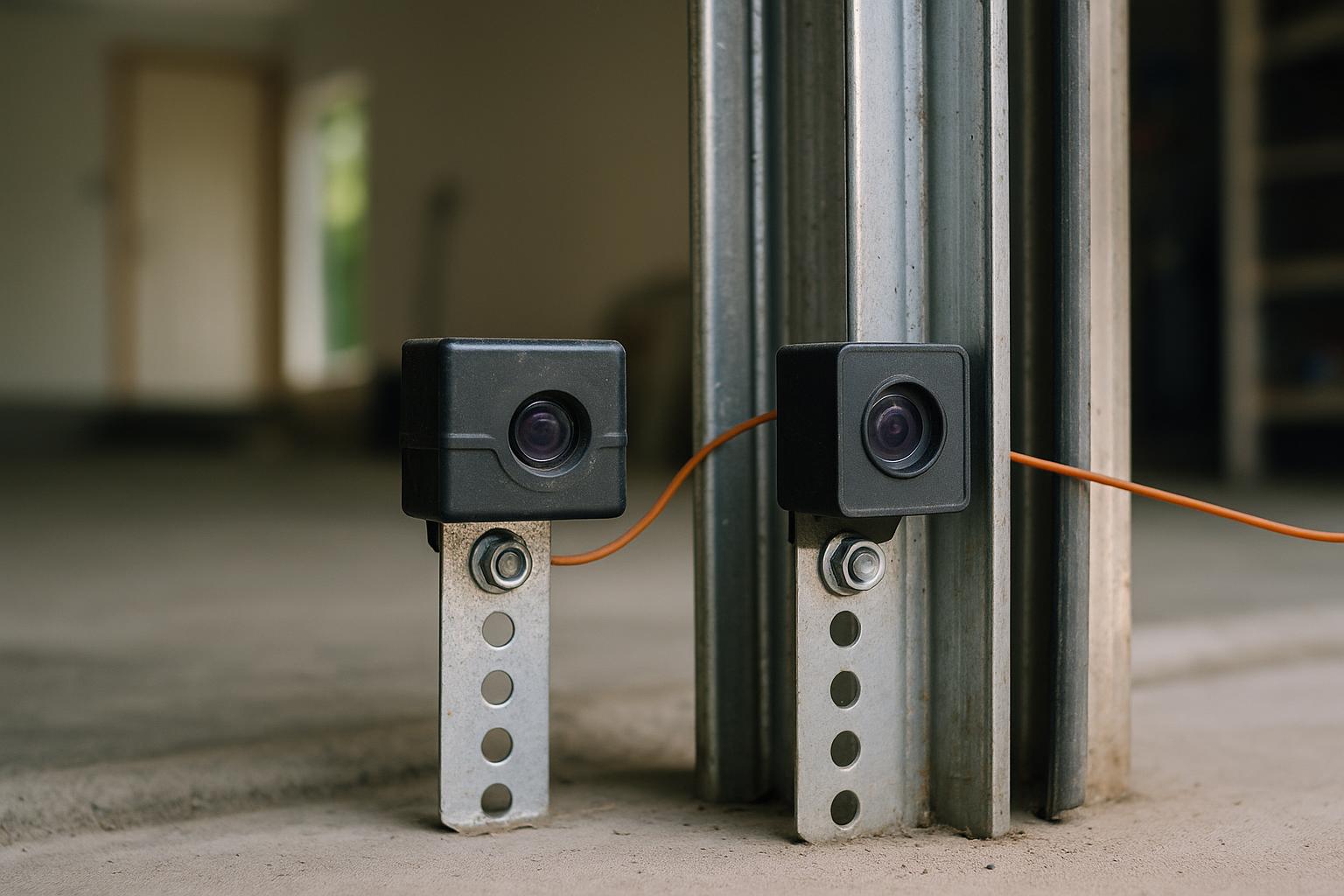
This is the number one cause of a garage door that reverses before reaching the ground. Every automatic garage door has two photo-eye sensors mounted near the bottom of the door tracks, one on each side. These sensors send an invisible beam across the opening. If something breaks that beam while the door is closing, the opener reverses the door to prevent injury or damage.
Over time, these sensors can get bumped, shifted, or knocked out of alignment by a bicycle tire, a trash can, or even vibrations from the door itself. When they're misaligned, the opener thinks something is in the way even when the path is completely clear.
What to check:
- Look at the LED lights on each sensor. Most models show a steady green light on one sensor and a steady amber or green light on the other when properly aligned. A blinking light usually indicates misalignment.
- Gently adjust the sensors until both lights are steady.
- Make sure nothing is blocking the beam path — cobwebs, dirt, or debris on the sensor lenses can also cause false readings.
- Clean the lenses with a soft cloth.
2. Dirty or Obstructed Sensor Lenses
Even if your sensors are perfectly aligned, dirty lenses can prevent the beam from transmitting properly. Garages in Union City and the surrounding Tri-City area can accumulate dust, especially during the dry summer months. Spiders also love to build webs right across sensor lenses.
A quick wipe with a clean, dry microfiber cloth every few months can prevent this issue entirely. It's one of the simplest maintenance tasks you can do, and it saves a lot of headaches.
3. Incorrect Close-Limit Settings
Your garage door opener has close-limit settings that tell it how far the door needs to travel before it's fully closed. If these settings are off — set too far, specifically — the opener thinks the door has hit an obstruction when it reaches the floor, and it reverses.
This commonly happens after a new opener installation, a spring replacement, or when someone adjusts the settings without fully understanding how they work.
How to adjust:
- Locate the limit adjustment screws on your opener unit (usually on the back or side of the motor housing).
- The close-limit screw controls how far the door travels downward.
- Turn the screw in small increments — typically a quarter turn at a time — and test the door after each adjustment.
- Stop adjusting once the door closes fully and stays closed without reversing.
If you're not comfortable making these adjustments, it's worth having a technician handle it. Incorrect settings can cause the door to press too hard against the floor, which puts unnecessary strain on the opener and the door itself.
4. Worn or Damaged Tracks
The metal tracks that guide your garage door up and down need to be clean, properly aligned, and free of dents or bends. If a track is damaged, the door can bind or stick as it moves, and the opener may interpret that resistance as an obstruction and reverse.
Visually inspect both tracks from top to bottom. Look for:
- Dents or flat spots in the track
- Gaps between the track and the wall-mounted brackets
- Debris, rust, or buildup inside the track channel
- Loose bolts or brackets
Minor debris can be cleaned out easily. However, bent or damaged tracks typically need professional attention. Trying to bend a track back into shape without the right tools can make the problem worse.
5. Problems with the Garage Door Springs
Your garage door springs do the heavy lifting — literally. They counterbalance the weight of the door so the opener doesn't have to work as hard. When springs are worn, weakened, or broken, the door becomes significantly heavier for the opener to manage. The opener's force sensors may detect this extra resistance and reverse the door as a safety precaution.
If you suspect a spring issue, this is not a DIY repair. Garage door springs are under extreme tension and can cause serious injury if handled improperly. Our team handles spring replacements regularly for homeowners throughout Union City, Fremont, Hayward, and Newark, and we always recommend leaving this job to trained professionals.
6. Opener Force Settings Need Adjustment
In addition to limit settings, your garage door opener has force settings that control how much power it uses to open and close the door. If the closing force is set too low, the opener may not have enough power to push the door all the way down, interpreting normal resistance as a blockage.
Like limit adjustments, force settings should be changed in small increments. Be careful not to set the force too high, as this can override the safety reversal feature — which exists to protect your family.
7. Wiring Issues
Less commonly, the problem can stem from damaged or frayed wiring between the sensors and the opener unit. Rodents, weather exposure, or simple wear and tear can compromise the wiring over time. If you've checked everything else and the door still reverses, a wiring inspection may be in order.
When to Call a Professional
Some of these fixes — cleaning sensors, checking alignment, removing track debris — are perfectly manageable for most homeowners. But if you've gone through the troubleshooting steps and the door still won't close properly, or if the issue involves springs, tracks, or opener mechanics, it's time to call in an expert.
At Union City Garage Door, we diagnose and repair reversing issues every week. We've seen every variation of this problem across homes in Union City, Castro Valley, San Leandro, and the broader East Bay. Our technicians pinpoint the exact cause quickly, fix it right the first time, and make sure your door operates safely before we leave.
Don't Ignore a Reversing Garage Door
A garage door that won't close is more than an inconvenience. It's an open invitation to theft, weather damage, and pests. It also puts extra strain on your opener, which can lead to a more expensive repair down the road if left unaddressed.
If your garage door keeps reversing and you can't figure out why, give us a call. We offer prompt service and can usually resolve the issue in a single visit. Your garage door should work for you, not against you — and we're here to make sure it does.